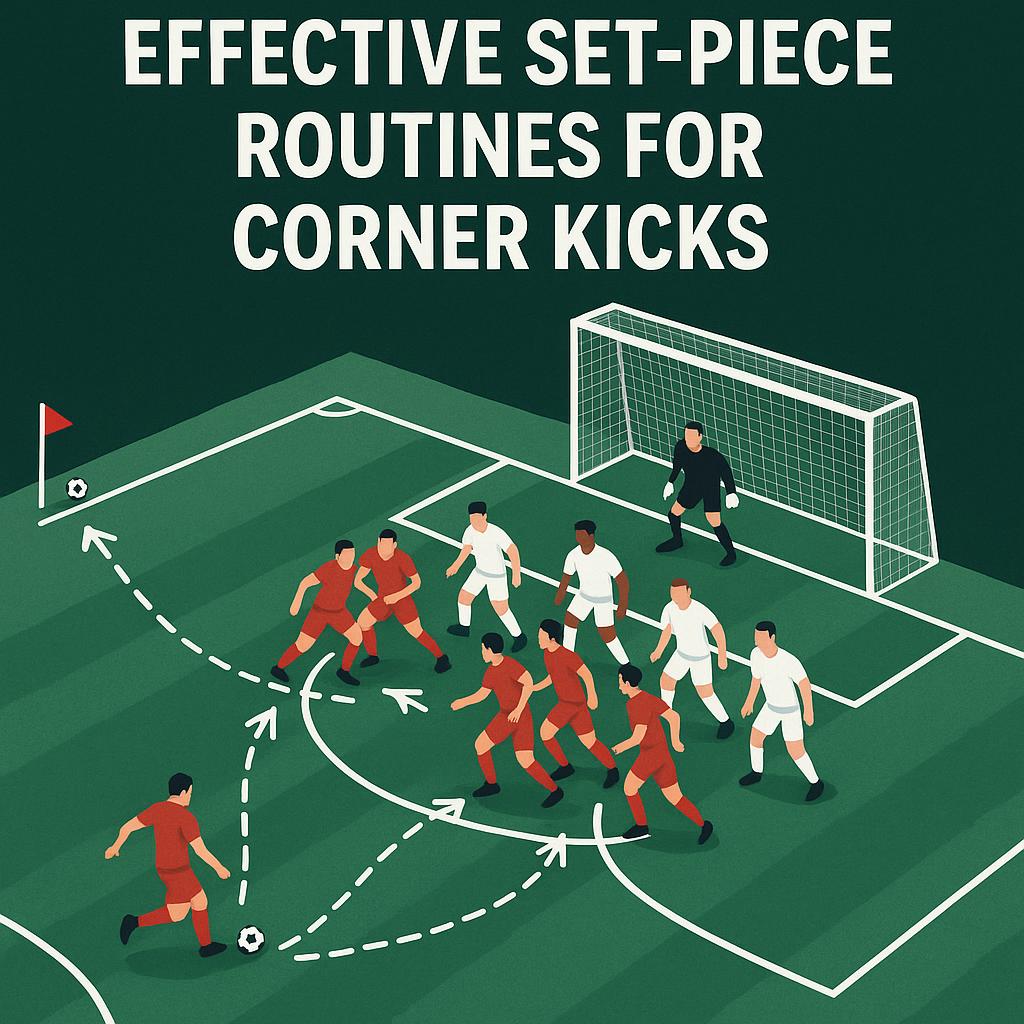
In soccer, the beautiful game, most goals certainly come from open play. However, a surprising amount, roughly 20-30% of all goals, actually originates from set pieces. Within these, corner kicks are truly golden opportunities. For any coach, getting really good at creating sharp, effective set piece routines for corners can genuinely turn the tide of a game. It deeply influences overall soccer coaching tactics. This isn't just about lobbing the ball into the box and crossing your fingers. It's all about precision, a bit of trickery, and perfectly timed, coordinated movement. This clever approach transforms what looks like a simple restart into a very real scoring chance.
Imagine your team is a goal down with only minutes to spare. Then, a corner kick gets awarded. What if you had a routine, polished to perfection, one that could dismantle even the most stubborn defense? That's precisely the kind of impact we're talking about. This guide will take you step by step, showing you how to craft creative and potent routines that truly crank up your team's scoring potential.
Why Corner Kicks Matter So Much
Corner kicks offer way more than just a simple restart. They're a direct attack on the opponent's goal. Think about it: the ball sits still. This gives your team a unique leg up to orchestrate a play without immediate pressure from a challenging opponent. Stats often show that teams with well practiced set piece routines consistently bag more goals throughout a season. For instance, many top flight clubs in Europe frequently credit a good chunk of their goals to set pieces, especially corners.
So, why are these so important? First off, they let your tallest or best heading players get into prime spots. Second, they pack the penalty area, often causing mix ups or mistakes from the defending side. And finally, they offer a real element of surprise. This holds especially true if your routines are varied and hard to predict. If you can consistently create two or three solid chances from every ten corner kicks, your team's total goal count will absolutely jump up.
Understanding the Fundamentals of a Corner Kick
Before we jump into complex routines, let's quickly go over the fundamentals. A corner kick is given when the whole ball crosses the goal line, on the ground or in the air, after a defending player last touched it. The ball is then placed in the corner arc closest to where it went out of bounds. Opponents need to stay at least 9.15 meters (10 yards) from the corner arc until the ball is put into play. The kicker has to strike the ball so it moves, and they can't touch it again until another player has.
Understanding these simple rules truly paves the way for designing your strategy. So, what type of delivery will you go with? Will it be an inswinging delivery, curling right towards the goal, making it tricky for the goalkeeper to anticipate? Or perhaps an outswinging delivery, bending away from the goal, which can give your attackers a better angle to strike with power? Both options pack a punch and work wonders when deployed strategically.
Key Principles of Effective Corner Kick Design
Crafting a successful corner kick routine isn't just about sketching lines on a whiteboard. It really calls for understanding a few core principles that generate chances and highlight defensive soft spots. Let's dig into these crucial elements:
Deception and Unpredictability The best routines are truly the ones that keep your opponents on their toes. If your team consistently makes runs to the near post, defenders will figure it out fast. So, mix up your approaches. Use different players to take the kick, alter the type of delivery, and try various starting positions for your players. A team that uses a short corner one moment and then a direct, driven ball the next will be far tougher to defend. This element of surprise is a fundamental part of successful soccer tactics.
Player Movement This is truly the core of any successful set piece. Players aren't just standing idle. They're making specific runs, creating blocks to hinder defenders, or using screens to open up space for teammates. Think about diagonal runs, runs towards the ball, or runs away to draw defenders and open up gaps for others. The timing of these runs is utterly critical. A run started too soon or too late can completely derail the whole play. Every player must know their precise path and exactly when to execute it. Mastering essential soccer drills for optimal positioning is vital for perfecting these movements.
Timing and Execution Precision is everything. The ball's delivery, the timing of the runs, and the contact all need to line up flawlessly. Even a fraction of a second off can be the difference between a goal and a missed chance. This highlights just how important consistent practice and super clear communication are among your players. For instance, a perfectly timed run to the near post demands the ball to land at that precise spot the instant the attacker gets there, not a split second too early or too late.
Roles and Responsibilities Every player involved in the corner kick routine absolutely needs a crystal clear role. Who's the main target for a header? Who makes the decoy run? Who sets a screen? Who's waiting for a possible rebound? Clearly defined roles cut out confusion. They make sure every player truly contributes to the play's success. For example, one player might be assigned to block the toughest opposing defender, another to attack the ball, and a third to snag any clearances or loose balls at the edge of the box.
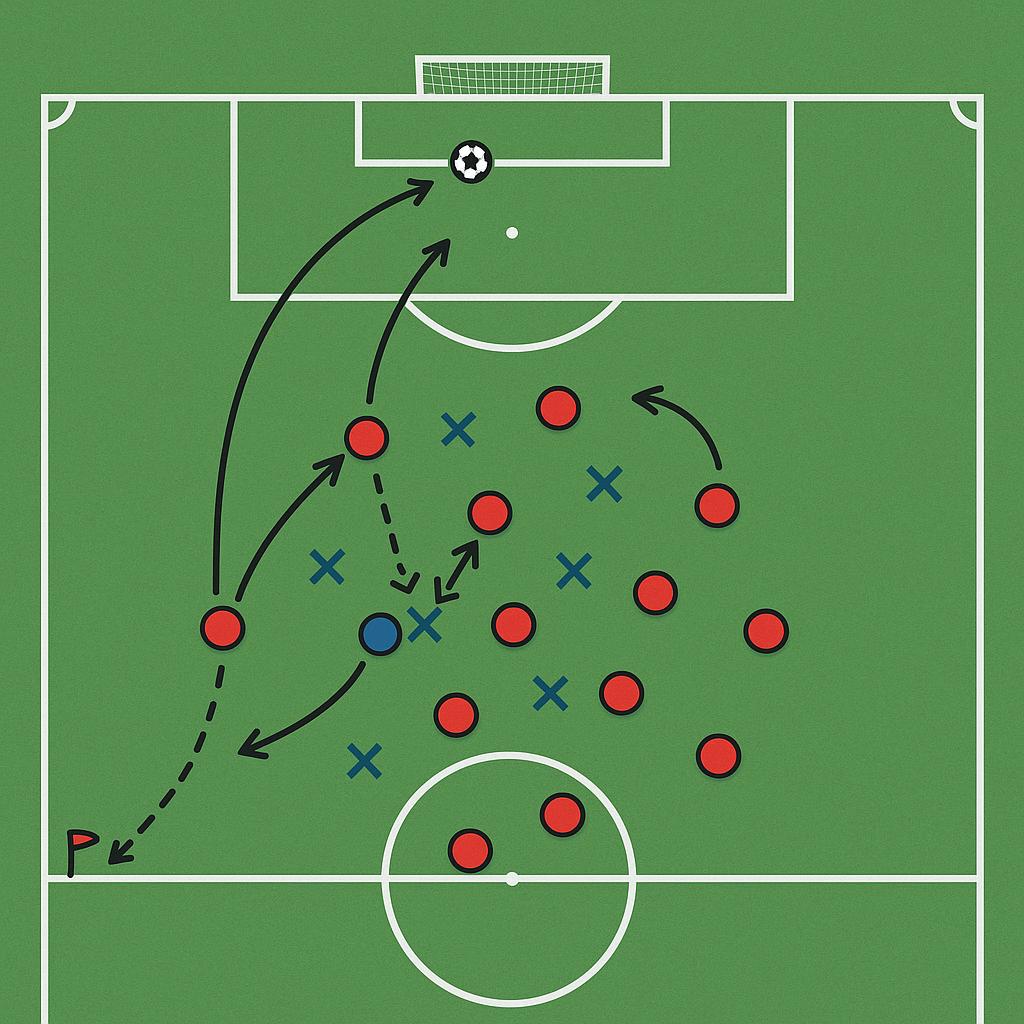
Common Corner Kick Tactical Variations
Teams employ all sorts of tactical variations to really make the most of corner kicks. Getting a grip on these can help you put together a rich playbook of options for your squad:
Inswinging versus Outswinging Delivery An inswinging delivery curls towards the goal. This often causes chaos as it bends through the air, making things tough for both goalkeepers and defenders. You can aim it directly for the goal or toward your attacking players. An outswinging delivery, conversely, curves away from the goal. This often gives attackers more room to strike the ball with power and precision, as they're running onto it. Both types are impactful and hinge greatly on the kicker's skill and the targeted player's preference.
Near Post Runs This involves one or more players making swift, sharp runs toward the near post. The whole point is either to get a flick on, a direct header, or to pull defenders away and open up space elsewhere. This tactic is super effective for quick goals. It can really catch defenses napping, particularly if the ball arrives fast and low.
Far Post Attacks Players attack the far post, often aiming for a header across goal or a direct shot. You can combine this with a central overload to pull defenders right out of their positions. Sometimes, a player stationed at the far post might also be responsible for grabbing any second balls if the initial attack is cleared.
Central Overload This involves cramming a large number of attacking players into the penalty box's central area. It creates real congestion, making it incredibly tough for defenders to mark effectively. This strategy thrives on chaos and can easily lead to deflections or opportunistic goals. Defenders really struggle to keep tabs on multiple runners in such a tight space.
Short Corners Instead of a direct cross, a short corner means passing the ball to a nearby teammate. This can pull defenders out of the box, set up better angles for a cross, or simply help you keep possession if a direct shot isn't the main goal. It might lead to a cross from a fresh angle or a quick one two to slice through the defense.
The "Train" or "Conga Line" This is a clever, deceptive routine where several attacking players line up in a formation resembling a train. Just before the kick, they suddenly break off in various directions. This causes major confusion, making it genuinely tough for defenders to track their assigned players. It leans heavily on perfectly coordinated and timed movements.
Designing Your Routine, Step by Step
Now, let's put it all together and start designing your very own routines:
Step 1: Analyze Your Opponent Before every match, really dig into the opposing team's defensive setup on corner kicks. Do they mark zonally, man to man, or some mix? Are any of their defenders weak in the air? Is their goalkeeper keen to come off the line or do they stick to it? Understanding their soft spots truly helps you fine tune your strategy.
Step 2: Identify Your Players' Strengths Who are your best headers? Who is good at flicking the ball? Do you have quick, agile players who can make sharp runs? Who has a powerful shot from the edge of the box? Play to your strengths. If you have a tall defender who also excels in the air, absolutely consider bringing them forward for corners.
Step 3: Define the Objective What's the main aim of this particular routine? Is it a direct shot on goal? A knockdown for a follow up shot? Or is it to generate a second ball chance outside the box? Having a clear objective steers the whole design process.
Step 4: Map Out Movement Patterns This is where visualization tools really come in handy. On a soccer coach board, plot out your players' starting positions and their planned runs. Use clear arrows to show movement. Pinpoint exactly where the ball should be delivered. Consider creating decoy runs that lure defenders away from your main target. For instance, you might have one player sprint to the near post to draw attention, while another attacks the space at the far post. Tools like the SPLY app are super useful here, letting you sketch out these patterns with pinpoint accuracy.
Step 5: Assign Roles Clearly communicate each player's role within the routine. This includes the kicker, the primary target, players making decoy runs, players setting screens, and players positioned for second balls. Ensure everyone understands their specific job and how it contributes to the overall success of the play. For example, one player might be tasked with blocking the strongest opposing defender, another with attacking the ball, and a third with picking up any clearances or loose balls at the edge of the box.
Step 6: Practice, Practice, Practice A routine truly only works if it's been practiced thoroughly. Carve out specific time in training for corner kick routines. Repetition builds muscle memory and hones timing. Begin with walkthroughs, then slowly crank up the pace. Practice against both passive and active opponents to fully mimic game conditions. The more your players practice, the more natural and instinctive these movements will become.
Leveraging Technology for Set Piece Mastery
In today's fast moving soccer world, technology can really amp up your coaching abilities. It makes insights, like those from video analysis, absolutely vital. This is exactly where tools like the SPLY app on iOS truly stand out. Think about being able to draw out intricate movement patterns on a virtual soccer coach board, complete with player positions and ball trajectories.
The SPLY app lets you:
- Edit and create tactical boards: Design endless variations of your corner kick routines. You can experiment with different runs and target areas. You can plan every tiny detail, from the kicker's position to the designated scoring zone.
- Export to image: Easily share your well thought out diagrams with your team. A clear visual representation helps players grasp complex movements much faster than just verbal instructions. This makes sure everyone is truly on the same page.
- Create a video: This is where SPLY really shines. You can record yourself explaining the routine, drawing on the board in real time, with your face and voice overlaid on the video. For example, demonstrate a near post run and explain the timing of the delivery while drawing the path directly on the screen. This personalized, dynamic instruction is far more engaging and effective than static diagrams. It lets your players visualize the entire sequence as if you were right there with them on the pitch.

By using such technology, you can streamline your planning, drastically improve communication, and ensure your players truly absorb the routines more effectively. This all leads to more coordinated plays and, ultimately, more goals.
Real World Examples of Successful Corner Kicks
Many teams have earned a name for themselves through their set piece expertise. For instance, Liverpool under Jürgen Klopp grew incredibly dangerous from set pieces. They often employed intricate blocks and runs that resulted in crucial goals, clearly showing how effective well practiced routines can be. Likewise, national teams like England in recent tournaments have shown a clear uptick in their set piece scoring. This really underscores the impact of dedicated coaching and smart planning.
Just think how defenders get drawn to the ball. Then, a player makes a late, smart run into the space left open. Or how a clever screen frees up a specific attacker for a header. These aren't accidents. They come directly from painstaking design and countless hours on the training ground.
Troubleshooting and Adapting
Even the best thought out routines won't always hit the mark. Defenses adjust, or your players might not execute perfectly. If a routine isn't getting results, don't hesitate to adapt. Pinpoint exactly why it's falling short. Is the delivery inaccurate? Are the runs poorly timed? Is the opponent simply too strong defensively in that particular zone? You might need to adjust a player's starting position, change the type of delivery, or even ditch a routine that's not clicking and bring in a fresh one. Flexibility and ongoing analysis are crucial for lasting success in set piece coaching.
Conclusion
Crafting impactful set piece routines for corner kicks is a truly vital part of modern soccer coaching. It's way more than just luck. It boils down to strategy, pinpoint accuracy, and tireless practice. By concentrating on deception, coordinated movement, clear roles, and using modern tools, you can turn your team's corner kicks from hopeful crosses into bona fide goal scoring opportunities. Always remember to study your opponents, leverage your team's strengths, and keep refining your routines. Start putting these principles into action today. And also, think about how a tool like the SPLY app can help you visualize, teach, and really perfect your team's corner kick prowess. Just consider the possibilities when every corner kick becomes a genuine threat, opening up fresh scoring avenues and boosting your team's overall performance.